Investing in Platinum and Palladium: Opportunities, Risks and UK Tax Considerations
Gold and silver may be the best-known precious metals, but they are not the only options available to investors. Platinum and palladium are rare metals with important industrial uses, concentrated supply chains and price movements that can differ considerably from gold.
Those characteristics may provide diversification, but they also introduce additional risks. Before purchasing either metal, investors should understand what drives demand, how the transition to electric vehicles could affect the market and the tax and resale implications of owning physical bullion in the UK.
Platinum and Palladium Are Different Markets
Platinum and palladium belong to the platinum-group metals, often abbreviated to PGMs. Although they share some characteristics, they should not be treated as interchangeable investments.
Platinum has a relatively broad range of uses, including vehicle-emissions systems, chemical processing, glass manufacturing, petroleum refining, electronics and jewellery.
Palladium demand is more heavily concentrated in the automotive industry, particularly in catalytic converters used in petrol and hybrid vehicles. This makes palladium especially sensitive to vehicle production, emissions regulations and changes in automotive technology.
Unlike gold, which is widely held as a monetary and wealth-preservation asset, platinum and palladium are more closely linked to industrial activity.
Industrial Demand: An Opportunity and a Risk
Catalytic converters use platinum-group metals to help reduce harmful vehicle emissions. Tighter emissions standards and continuing production of petrol, diesel and hybrid vehicles can therefore support demand.
However, this is not a simple growth story. Battery-electric vehicles do not require exhaust catalytic converters. Global electric-car sales continue to increase, creating a long-term challenge for traditional automotive demand. The International Energy Agency expects electric cars to represent approximately 28% of global car sales during 2026. International Energy Agency
Manufacturers may also substitute platinum for palladium, or palladium for platinum, where technically and economically possible. Changes in their relative prices can therefore influence which metal is used.
Recent market forecasts illustrate this divergence. Platinum continues to benefit from tight supply and firm industrial use, while palladium demand is facing greater pressure from declining internal-combustion vehicle production. Johnson Matthey forecast that palladium demand could decline during 2026 and that the market may move from a prolonged deficit into a small surplus. Johnson Matthey
Industrial demand can support prices, but it also makes both metals vulnerable to recessions, manufacturing slowdowns and technological change.
Concentrated Global Supply
The supply of platinum and palladium is concentrated in a relatively small number of countries.
South Africa is the dominant source of mined platinum, while South Africa and Russia are both major suppliers of palladium. This concentration can leave the market sensitive to mining disruption, power shortages, labour disputes, sanctions, transportation problems and geopolitical developments.
Recycling is also an important source of supply, particularly through recovered catalytic converters. Changes in vehicle-scrappage rates and recycling volumes can materially affect the balance between supply and demand.
A constrained supply chain can contribute to sharp price increases when disruption occurs. However, rarity alone does not guarantee investment returns. Prices still depend on the relationship between available supply and real-world demand.
At the time of writing, the World Platinum Investment Council forecasts a fourth consecutive platinum-market deficit for 2026, although it also expects overall platinum demand to be lower than in 2025. World Platinum Investment Council
Diversification Does Not Necessarily Mean Stability
Because platinum and palladium respond to different economic and industrial forces, they may behave differently from gold and silver. This can make them useful components of a diversified precious-metals holding.
However, diversification should not be confused with stability.
Both metals can experience substantial price volatility. Their markets are smaller than the gold market, and changes in automotive demand, investor sentiment or supply expectations can result in sharp movements in either direction.
Palladium’s previous dramatic price rises were followed by significant declines, demonstrating why past performance should never be treated as a reliable guide to future returns.
Investors should also remember that physical bullion produces no interest or income. Any return depends on the future selling price exceeding the original purchase price, VAT, dealer premium, storage costs and eventual selling costs.
Physical Bullion and Other Forms of Exposure
Investors can gain exposure to platinum and palladium through several routes:
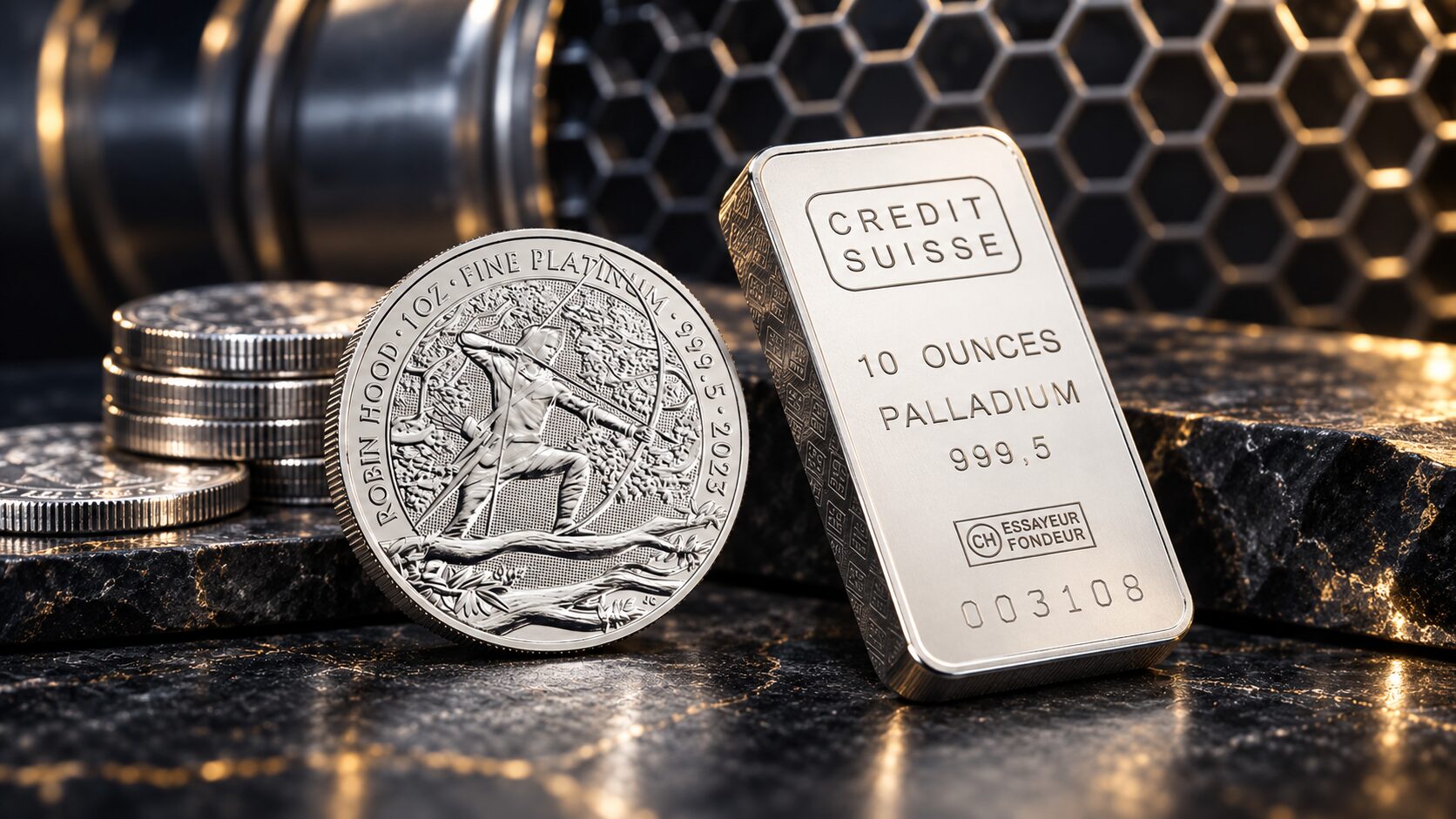
- Physical bullion coins and bars
- Exchange-traded products
- Shares in mining companies
- Futures and other specialist financial instruments
These options are not equivalent.
Physical bullion provides direct ownership of a tangible asset, but the owner must consider secure storage, insurance, authenticity, dealer premiums and the eventual resale route.
Exchange-traded products may offer easier trading but introduce fund structure, custody and counterparty considerations. Mining shares are influenced by company management, operating costs, political risk and wider stock-market conditions—not only by the underlying metal price. Futures are complex, leveraged instruments and are generally unsuitable for inexperienced investors.
KNIGHTS focuses on the practical considerations surrounding physical precious metals rather than recommending securities or speculative financial products.
UK VAT and Capital Gains Tax
Tax treatment is an especially important consideration for UK buyers.
Qualifying investment gold is exempt from VAT, but physical platinum bullion is generally subject to VAT at the standard rate, currently 20%. Palladium bullion will also normally fall under the standard VAT treatment rather than the investment-gold exemption. This creates an immediate cost that the metal must overcome before an investor makes a profit. The Royal Mint
Certain legal-tender bullion coins produced by The Royal Mint, including qualifying platinum coins, may be exempt from UK Capital Gains Tax for UK residents. That exemption does not generally extend to bullion bars or every overseas coin. The Royal Mint
Tax rules can change, and individual circumstances differ. Buyers should confirm the current treatment of a particular product and seek professional tax advice when necessary.
Questions to Consider Before Buying
Before purchasing platinum or palladium, consider:
- What role would the metal play within your wider holdings?
- Are you comfortable with its reliance on industrial and automotive demand?
- Have you accounted for VAT, premiums, storage and resale costs?
- How easily can the product be sold?
- Would a recognised coin or bar offer a clearer resale route?
- Are you prepared to hold through potentially substantial price volatility?
- Do you understand the difference between platinum and palladium rather than treating them as one investment?
Conclusion
Platinum and palladium can provide diversification beyond gold and silver, but their investment case is more complex than simple rarity or the promise of rising industrial demand.
Platinum currently benefits from constrained supply and a broad range of industrial applications. Palladium remains important to petrol and hybrid vehicle production, but its longer-term outlook is more exposed to electric-vehicle adoption and substitution between metals.
Neither metal should automatically be described as a safe haven, a stable investment or a route to high returns. Their suitability depends on the buyer’s objectives, time horizon, attitude to volatility and understanding of the total costs involved.
If you are considering physical platinum or palladium, speak with KNIGHTS about current availability, premiums, storage considerations and potential resale routes before making a decision.
This article is provided for general information only and does not constitute personal financial, investment or tax advice. Precious-metal prices can fall as well as rise, and you may receive less than you invested.